AI Voice Cloning Free Tiers Usage Limits
Free tiers cap synthesis output, not quality, so compare allowances to your actual monthly needs.
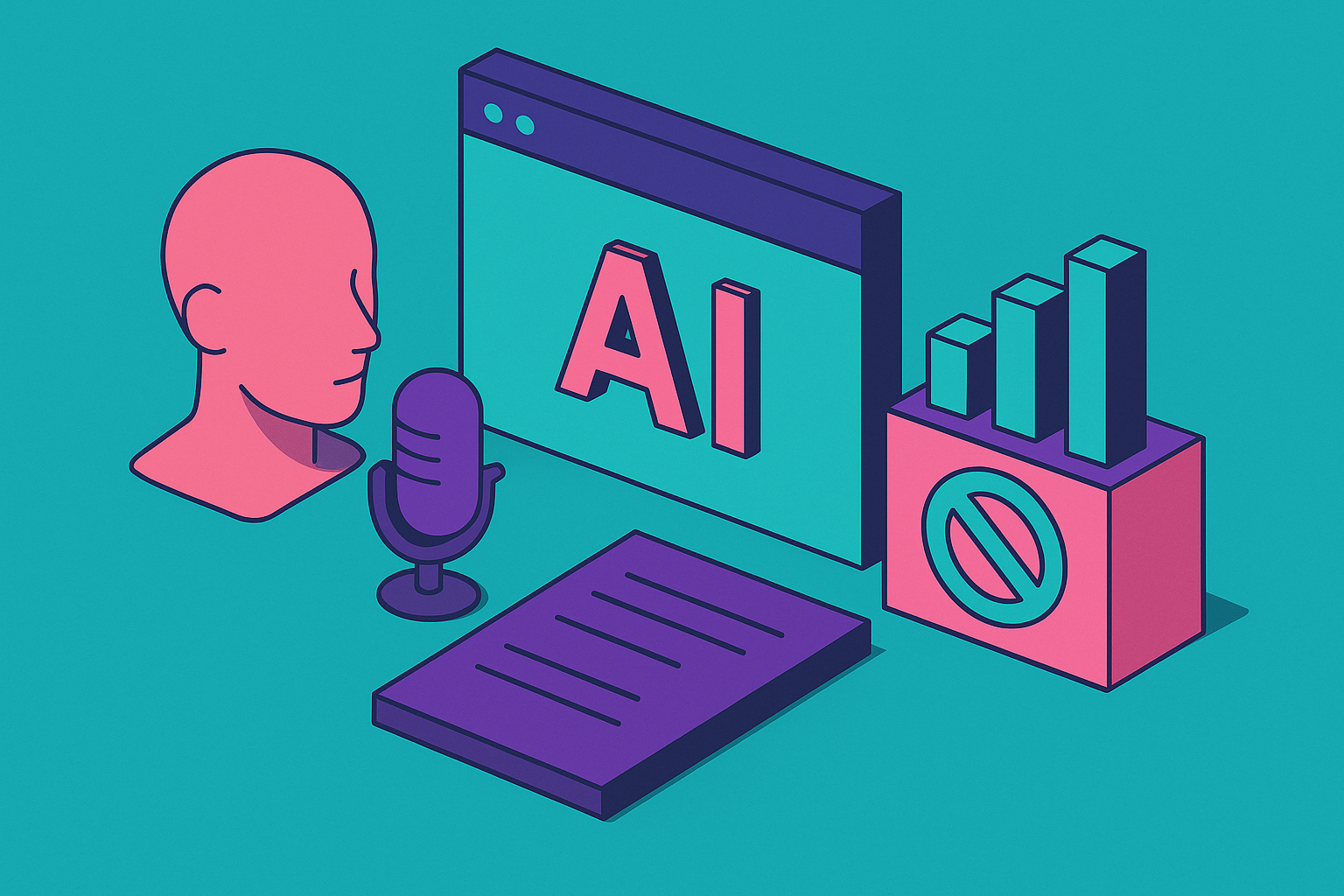
AI voice cloning free tiers exist because every sentence a cloned voice speaks costs real money to generate, so the companies offering these tools cap how much you can produce as a way of controlling that cost. That is a structural point, not a guess about corporate intentions. Most software gates its free users by hobbling the product itself: fewer features, a watermark, a slower export, a worse font selection. Voice cloning runs the opposite playbook. The clone a free user builds sounds the same as the clone a paying customer builds, because running the voice model every single time someone asks it to speak is what costs money, not making the voice model itself. A short reference clip is enough to build a usable voice print at low cost, so the meter does not start at creation. It starts at synthesis, every time you hit generate, and that is where a provider's compute bill actually grows.
This reframes the whole category for anyone shopping around. The instinct is to treat "free" the way you'd treat a free tier of a photo editor, bracing for a degraded product. Here the clone is not weaker, cheaper, or less convincing. What's limited is how much of it you get to use in a given stretch of time, and that distinction should change how a buyer compares options, because the comparison question is never "whose free voice sounds better." It's "whose free allowance actually covers what I need to do this month."
What characters, minutes, and credits measure
Shopping for a voice cloning tool means learning to read three different units that often get used interchangeably in marketing copy but measure three different things. Characters count the text you feed in. Minutes count the audio that comes out. Credits sit on top of both as a platform-specific currency that converts to one or the other depending on how the provider wants to price its compute.
Minutes are the most literal of the three because they measure finished audio duration directly, with no conversion math required. A tool that gives a free user a few minutes a month is handing over less runtime than one typical podcast intro segment, regardless of how tightly the script is written or how efficiently the sentences are structured. There is no clever editing trick around a minutes cap. Characters require a bit more translation: a two-minute welcome message is a few hundred words, which is the low thousands of characters once you count spaces and punctuation. Roughly that many characters is how much a minute of natural speech burns through, the piece of arithmetic worth keeping in your head before comparing any two tools.
Credits complicate the picture because they are not a unit of anything physical. A platform can bundle a monthly credit pool with a separate per-generation ceiling, so a user might have 8,000 monthly credits available but face a 500-character maximum on any single request. That means a two-minute script, which likely runs past 500 characters on its own, has to be chopped into pieces, generated separately, and stitched back together, even though the monthly total theoretically allowed for it. The headline number and the number that actually governs your workflow are not the same number, and credits are the unit most likely to hide that gap.
How hidden sub-limits compound the stated monthly cap
The number on the pricing page is usually the most flattering number a provider can put there, and it is rarely the number that decides whether a free tier works for a real project. Per-generation caps, restrictions on commercial use, and gates on whether you can even download the finished file are the smaller rules underneath the advertised monthly allowance, and those smaller rules actually determine usability. Vocloner's free tier is a clean example of how these stack: three saved voices, 1,000 characters a day, and a separate 200-character limit on any single request, all before you even ask whether the output can be used commercially. The daily number sounds generous until the per-request number forces you to break a single paragraph into four separate generations.
That fragmentation has a real cost beyond annoyance. A script that exceeds a per-request ceiling has to be split at sentence boundaries, generated in separate passes, then reassembled in an audio editor, and each seam is a place where pacing can stutter or tone can shift slightly between takes. A podcast intro that should take one generation and one listen-back now takes four generations, four listens, and a round of editing to smooth the joins. None of that appears in the headline character count.
Some providers describe pay-as-you-go pricing as "unlimited characters," when what they actually mean is that there's no hard ceiling but every character past the free allowance gets billed individually. "Unlimited" in that context describes the absence of a wall, not the absence of a cost. Reading past that phrase to find the per-character rate is the only way to know whether "unlimited" means affordable or just means uncapped.
What each free tier in the current market allows
Free voice cloning tools split into three structurally different groups, and knowing which group a tool belongs to tells you more than any single number on its pricing page. The groups are consumer web platforms built for creators, developer and API sandboxes built for engineers, and open-source models built for anyone with the hardware to run them locally.
Among consumer platforms, Vocloner's free tier caps a user at three saved voices, a daily allowance of 1,000 characters, a 200-character limit per individual request, personal use only, with standard text-to-speech available on the free rung and full cloning features reserved for paid plans. Magic Hour takes a different approach entirely: its voice cloner offers three free voice clone generations per day with no account required at all, trading a saved-voice model for a pure walk-up-and-use structure. AnyVoice sits closer to Vocloner's model but with more room upfront, offering five clone slots on its free tier, which gives a user more parallel voices to experiment with before hitting a wall. KikiVoice export audio as MP3 or WAV files on its free tier and supports more than 75 languages, though its own site notes that premium plans exist with higher limits and priority processing, so "free forever with no upgrade path" would be the wrong way to describe it.
Developer and API tiers run on a different logic altogether, built around a billing account and a technical integration for a creator working through code. Amazon Polly offers 5 million standard characters and a smaller allowance of neural-voice characters per month, free for 12 months starting from the first API call, but Polly is text-to-speech only. It does not offer personal voice cloning, so the millions-of-characters headline is not directly comparable to a cloning tool's character count even though both are measured in the same unit.
Open-source, self-hosted models form the third category that inverts the entire cost conversation. OpenVoice V2, documented by MyShell, natively supports six languages: English, Spanish, French, Chinese, Japanese, and Korean, and because it runs on hardware you control, there is no monthly character or minute cap imposed by a provider. The output volume a user can generate depends entirely on local hardware, usually a GPU with enough memory to run the model at a reasonable speed. That GPU is not free. Running a model yourself removes the per-request bill but replaces it with a capital expense, so "free" in the self-hosted category means no per-generation charge, not no cost.
Matching use case to tier: what each limit level is enough for
The right free tier is the one whose limit type and ceiling match the volume a specific job actually requires, and most people who hit a wall mid-project chose their tool by the biggest headline number rather than by what that number translates to for their task. Matching use case to tier is the entire exercise.
A short recurring clip, a voicemail greeting, an onboarding welcome message, a fifteen-second social video voiceover, is what these free tiers are built to handle. A monthly character allowance in the low thousands comfortably covers several two-to-three-minute pieces of this kind, and this is the use case the entire free-tier structure across the market is designed around.
A single podcast episode or a short narration piece sits right at the edge of what a free tier can absorb. A ten-minute episode script is close to 10,000 characters. One full episode can eat an entire month's allowance on some platforms, leaving no room for a second take, an alternate read of a flubbed line, or a re-recorded intro after a last-minute script change. Anyone producing a weekly show on a free tier alone is going to run out of runway by week two.
A full audiobook or a long-form course is not a free-tier job under any current structure. Narrating a standard nonfiction chapter requires far more volume than any consumer free tier provides, and this use case calls for either a paid subscription plan or a self-hosted open-source setup with a GPU capable of handling the workload.
Multilingual localization work, say, adapting a product demo script into eight languages for a global launch, benefits from a different kind of math. KikiVoice's weekly-reset credit structure combined with support for more than 75 languages makes it a better fit for multilingual testing than a platform that resets monthly but offers more volume in a single language, because the constraint that matters for localization work is breadth across languages, not depth in one.
Developers prototyping an integration are optimizing for a different variable. API tiers offering millions of free characters a month, like Polly's 5 million, are sized for engineering evaluation rather than finished creative output, so the right benchmark for that kind of testing is requests per development session, not minutes of polished audio.
Commercial use should be treated as a filter applied before any of the above math, not after it. If the output is going to be monetized in any form, a free tier without explicit commercial rights is not usable for that project regardless of how much character volume it offers, and Vocloner's personal-use-only restriction on its free tier is a direct example of a limit that has nothing to do with volume.
What to Check Before Building a Clone
Building a usable voice clone takes real time: recording a clean reference sample, listening back and adjusting for mispronunciations, sometimes respelling words phonetically to fix how the model handles an unusual name or technical term. Picking the wrong free tier doesn't cost a subscription fee, since nothing was paid. It costs those hours, spent building a clone that turns out to be unusable for the job it was built for.
Four questions settle that before any training sample gets recorded. Can the free tier actually generate audio and let you download the finished file? Does the tier's license permit commercial use for the specific context the audio will be published in? Is the per-generation character cap compatible with a typical script length, or will every piece of content need to be split and reassembled by hand? And what does the platform's policy say about using a submitted voice sample and its generated output for model training, including whether that policy changes once a user moves to a paid plan?
A sensible evaluation sequence follows directly from those four answers. Pick the tier whose limit type, characters, minutes, or credits, actually fits the use case identified above. Generate one complete, real piece of content, not a test phrase, end to end. Download it and check it against both quality and commercial-use requirements. Only then decide whether to upgrade on the same platform or move somewhere else entirely, before sinking more time into additional voices or longer training material.
For anyone whose volume needs are obviously going to outgrow a free tier from day one, the better question is whether a platform keeps the same clone quality across its free and paid plans and limits only output volume. That structure turns the eventual upgrade into a straightforward budget decision rather than a bet on whether paying more actually buys a better-sounding voice.