Synthetic Voice Identity for Brand and Product Personas
Custom voice personas beat library voices when brand identity matters more than speed.
Voice-enabled devices now number 8.4 billion worldwide. Speechmatics reports that voice agent usage grew ninefold in 2025, and 22% of Y Combinator's latest cohort is building voice-first companies. That's an infrastructure shift, not a niche trend, and most brand teams are still treating their synthetic voice like a font choice made the night before launch. A voice persona deserves the same planning that goes into a logo or a color system: a deliberate spec. This piece breaks down what actually goes into building one, and why the gap between "sounds fine" and "sounds like us" is where all the real work happens.
What a synthetic voice persona consists of
A voice is acoustic output. A persona wraps personality, language-aware behavior, and register-shifting around that voice, so it talks differently depending on who's on the line and why. Sierra put it at the August 2026 launch of its Voice Personas product: "A persona isn't simply a voice or a prompt telling an agent to 'sound empathetic.' It combines voice, personality, and language-aware behavior into one coherent experience."
A persona is vocal texture, pace, rhythm, emotional register, vocabulary range, formality level, how it handles someone talking over it, and how all of that flexes across cultures. NVIDIA's PersonaPlex-7B, released in January 2026, actually builds this split into its architecture: the model is conditioned on both acoustic characteristics and role or scenario context before a conversation even starts. Brand teams should run the same split on paper before anyone touches a microphone: an acoustic brief and a personality brief, kept as two different documents.
A persona is not a chatbot with a name slapped on it, an accent picked from a dropdown, or a system prompt that says "be friendly." That's a placeholder wearing a persona's clothes. An agent's policies, actions, and capabilities can stay fixed while how it says things changes completely. That separation between what the agent does and how it sounds doing it is what lets a persona scale past a single market or product line.
The strategic choices that shape a voice persona before any audio is generated
Start with the personality brief. Most teams get this backwards, picking a voice actor or a TTS model first and reverse-engineering a personality to fit whatever they already bought. What emotional register does the brand actually live in? Calm and reassuring, energetic and optimistic, dry and authoritative? A visual designer runs this exercise before touching a single color swatch. Voice teams skip it constantly, and it shows.
Audience and context matter just as much as tone. A voice built for a luxury fashion brand has no business staffing a financial services support line, and a gaming companion persona would feel bizarre fielding a healthcare intake call. Automotive, fashion, financial services, wellness, gaming, and healthcare are the sectors pushing hardest into AI voice right now, and each one carries a different emotional contract with its customers.
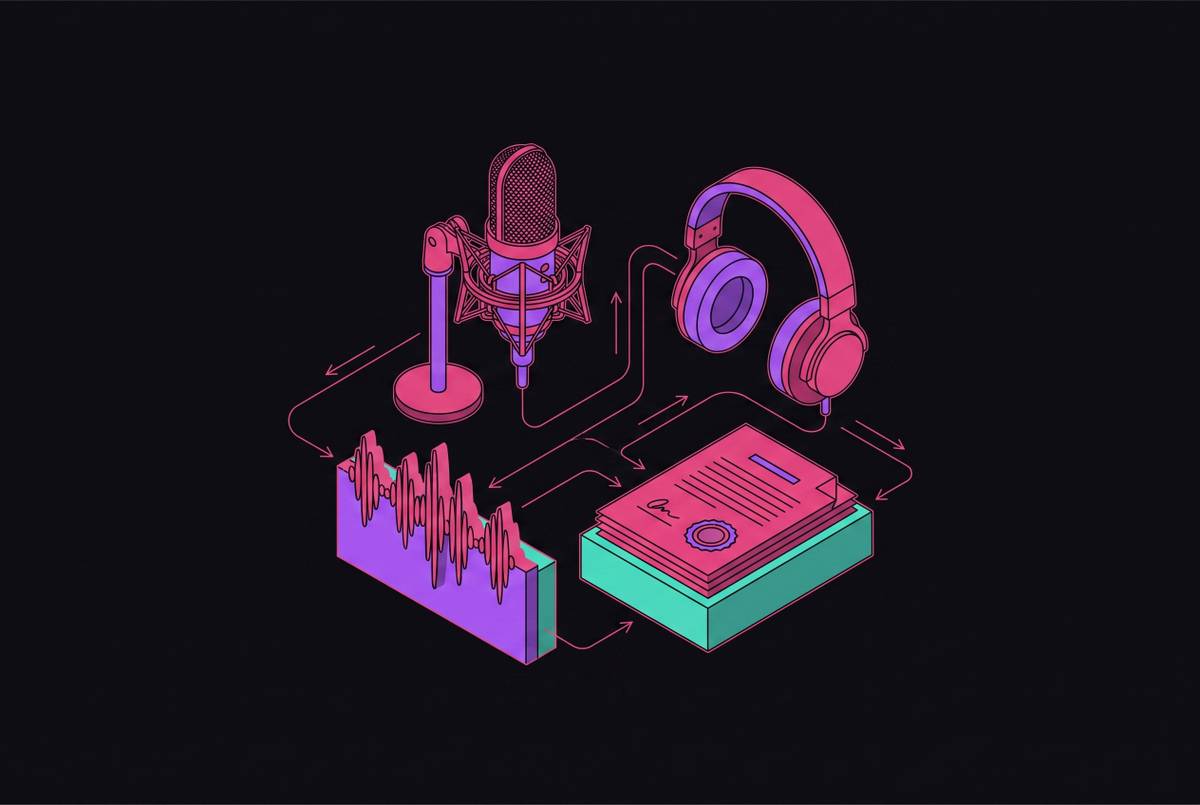
Formality and pacing aren't decoration, they're functional signals customers read whether or not anyone designed them on purpose. Sierra's own guidance notes that expectations around formality and conversational style shift across cultures and need to get built into a persona from day one, not patched on later during localization. Soundverse has described businesses codifying sound design down to vocal texture and emotional cadence, the same way a style guide locks down typography and hex codes. A voice persona needs a spec document, the same boring artifact that already governs your logo usage rules.
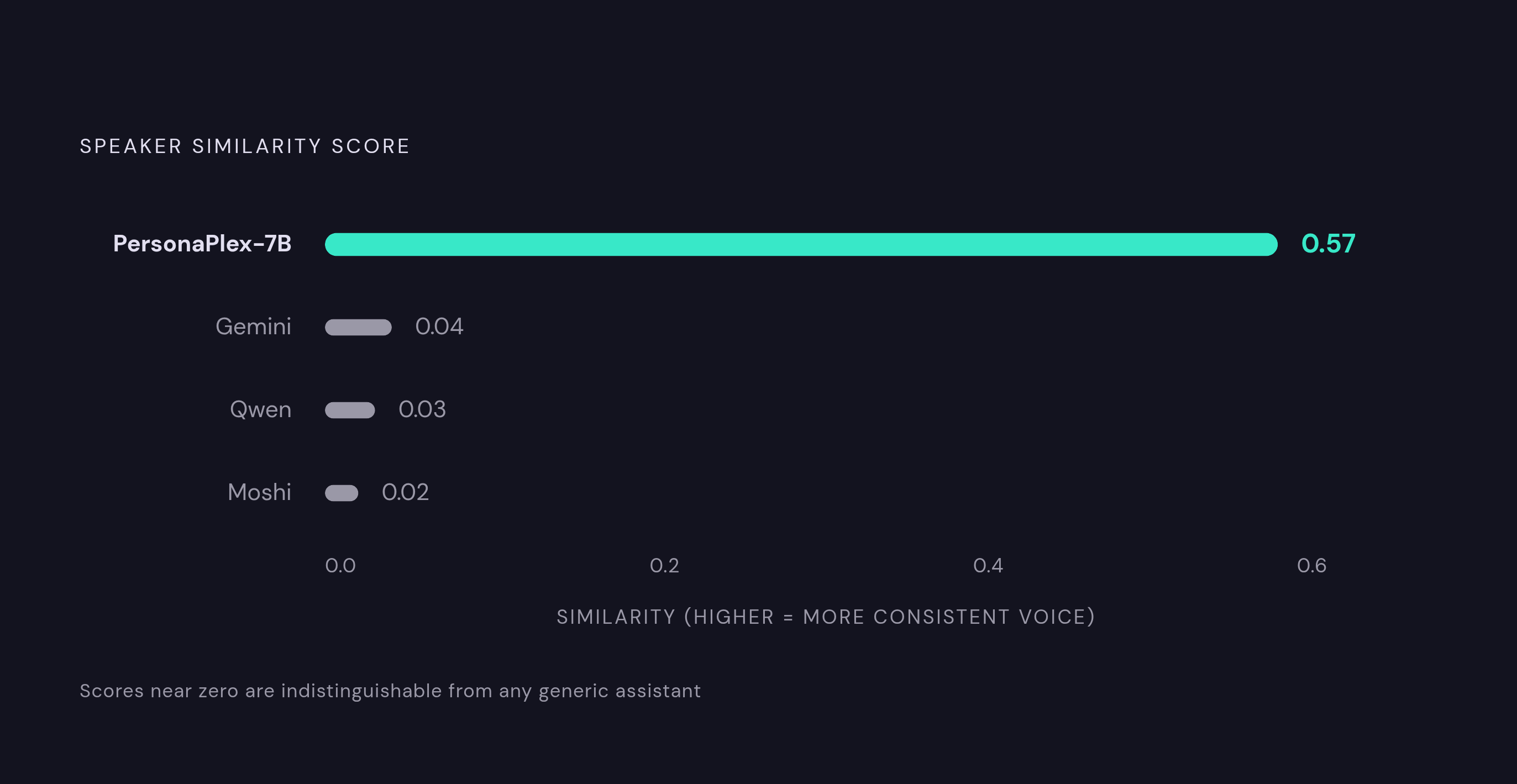
Then there's the custom-voice-versus-library-voice decision, and most brands default to library because it's faster, which is usually the wrong call if the voice is meant to carry brand weight. Custom buys distinctiveness and ownership at the cost of time and production effort. A library voice ships fast but risks sounding like everyone else's assistant, because it probably is everyone else's assistant. Speaker similarity is the technical measure that separates these outcomes: PersonaPlex hit a score of 0.57 on voice cloning, while competing models including Gemini, Qwen, and Moshi scored close to zero. That gap in speaker similarity is the difference between a voice that holds its identity across interactions and one that is effectively indistinguishable from any other assistant on the market.
How the persona behaves differently across contexts without losing coherence
Sierra's architecture runs one underlying agent, built once, with multiple personas layered on top for different brands, markets, and use cases. Consistency lives at the capability layer, and personality is the variable, not the constant. That inverts how most teams instinctively build, which is to bolt a single fixed voice onto every market and hope nobody notices the mismatch.
A persona should slow down for a distressed customer, loosen up for a younger audience, and simplify its vocabulary when the topic turns technical, all without losing its underlying character. Pace and interruption handling aren't backend engineering footnotes here, they're temperament made audible. The Sierra Agent SDK now lets agents adjust pacing and respond naturally when a customer talks over them, and that's as much a persona trait as it is a UX feature.
Language adds another axis. Sierra data cited by welcome.ai shows a major UK retailer running AI agents across 83 countries and 20 languages, and getting that right takes a lot more than translation: formality, pacing, and conversational norms all shift market by market.
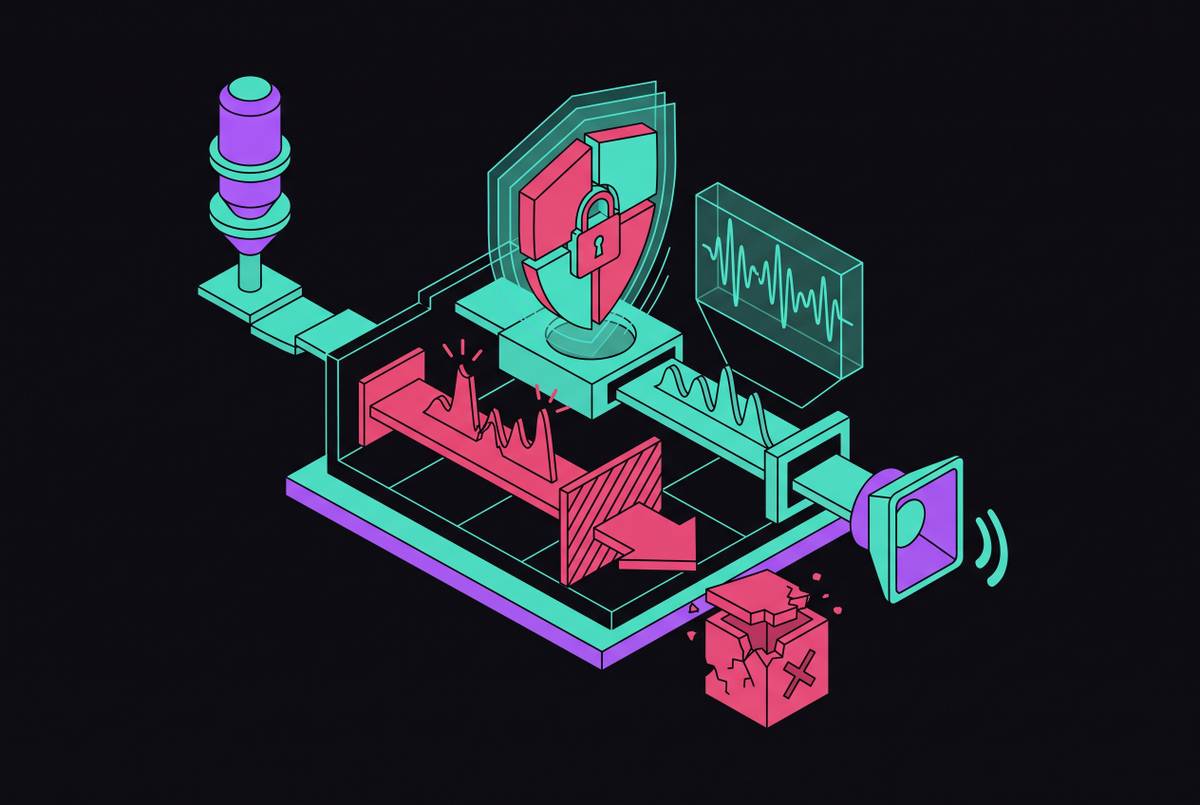
Extended conversations are where the seams show. PersonaPlex-7B can drift from its role prompt past the 10 to 15 minute mark once a conversation shifts topics significantly. Persona coherence isn't a decision made once at launch, it's a guardrail maintained continuously, call after call. Sierra's answer is operational: voices get sealed in production, so the version tested in evaluation is the exact version customers hear. Treat the persona like a governed asset, because the moment it isn't, it starts to drift.
Multilingual deployment as a first-class design problem, not a translation task
Translating words keeps the meaning intact. Adapting a persona keeps the character intact, and those are not the same job, no matter how often procurement treats them as interchangeable line items. One produces a voice that sounds foreign in its second language: dutifully correct, slightly off. The other produces a voice that sounds like it was born there.
Formality norms, acceptable humor, conversational pacing, how much emotional expressiveness reads as warm versus how much reads as intrusive: every one of these shifts by market. A persona built to feel approachable in one country can land as overly casual, even presumptuous, in another.
Native-quality multilingual output can't be accent-switching bolted onto a single model after the fact. Language coverage (how many languages a platform lists on a slide) differs from language quality (whether the output sounds like a native speaker or a well-meaning tourist), and it needs training data deep enough in each language to sound native rather than translated on the fly.
PersonaPlex-7B is the clean case study here, and it's a cautionary one. Strong persona control, a genuinely good speaker similarity score, all of it currently limited to English. The architecture hasn't delivered that same fidelity anywhere else yet. Multilingual capability belongs on the selection checklist as a hard requirement, not something a procurement team assumes and moves past.
Testing and evaluating a persona before it reaches customers
A voice that sounds great as an isolated studio clip can fall apart the moment it hits a real conversation: interruptions, topic changes, an actually frustrated customer on the other end. Testing in a vacuum, alone in a studio, tells you almost nothing about how the persona holds up under load.
Sierra's evaluation infrastructure runs personas against thousands of simulated customer interactions before anything reaches production. For one agent, pairing a natural-sounding voice with a well-built persona lifted resolution rates by almost 50%. That number turns persona design from an aesthetic choice into a functional performance lever. The right test is outcomes: resolution rate, satisfaction scores.
Speaker similarity scores belong in that same evaluation rubric. PersonaPlex's 0.57 against near-zero scores from competing models is the kind of objective, comparable number that should sit next to latency and accuracy on a vendor scorecard.
Simulation before launch surfaces the breakage points, emotional edge cases, multilingual switches, and scenarios nobody scripted for, in testing, before an actual customer encounters them. Finding the crack in a simulation is cheap. Finding it on a call with a furious customer is not.
None of this survives without governance. Who owns the persona spec? Who's allowed to modify it, and what actually triggers a review? Personas degrade fast when they're treated as a one-time setup task instead of a maintained asset somebody is accountable for, the same way nobody would let a random employee change the logo on a whim.
The current platform landscape for building and deploying a brand voice
Sierra Voice Personas, launched August 7, 2026, was built specifically for enterprise brand voice work. It separates agent capability from persona, supports adapting personality across languages, folds in A/B testing and simulation, and benchmarks the voice models running underneath on an ongoing basis. It's built for teams that already have an agent running and want to layer branded expression on top of it.
NVIDIA's PersonaPlex-7B, released January 15, 2026 and accepted at ICASSP 2026, is open-source and built for full-duplex speech-to-speech, with 70-millisecond speaker-switch latency and that 0.57 speaker similarity score. It's conditioned through the voice-prompt-plus-text-prompt structure described earlier, and it pulled over 330,000 downloads in its first month, with roughly 316,000 Hugging Face downloads in the trailing month as of June 2026. English only, persona drift past 10 to 15 minutes on topic shifts, no model update since the version 1.0 launch. Good fit for developers building custom voice pipelines who want open-source control over persona behavior, bad fit for anyone who needs a second language by next quarter.
SoundHound AI positions itself as a white-label brand voice provider across automotive, restaurants, retail, financial services, healthcare, and smart devices. It processed close to 30 million AI customer interactions for telecom and retail businesses globally in 2025. Sales Assist, an in-store agent for telecom retail, debuted at MWC 2026, and Amelia 7, built for agentic voice commerce across vehicles, TVs, and smart devices, debuted at CES 2026. Check this shelf if the goal is voice embedded directly into a device, not delivered through an app or a call center.
HubSpot's Brand Voice tool, last updated September 14, 2026, generates a brand voice baseline from a company's existing website content and writing samples, with customizable tone, personality, and terms to avoid. It covers blogs, case studies, emails, landing pages, SMS, and social content, and ships in English, Spanish, Portuguese, French, German, and Japanese. It's scoped to written content, not spoken voice agents, so it's the right tool for aligning AI-generated copy to a voice standard, not for building an audio persona. Don't confuse the two categories when a vendor's sales deck blurs them together.
Run any platform through the same checklist: how deep is the persona control (a full voice-plus-personality brief versus a voice-only setting), how good is the multilingual fidelity, what's the latency profile (content generation and real-time agents have very different thresholds), is it open-source or managed, does it ship with real simulation and testing infrastructure, and does it treat voice as governed or merely configured.
Where synthetic voice personas are heading
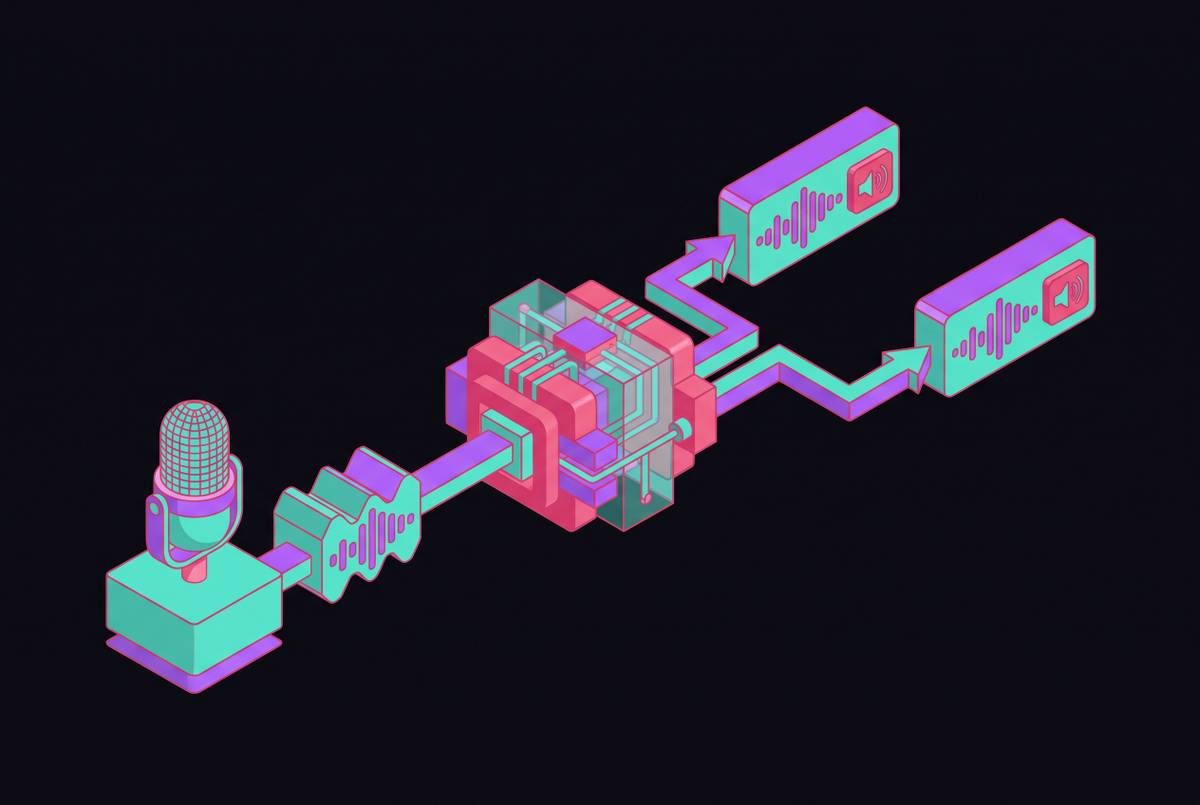
The industry is moving away from cascaded pipelines (speech recognition feeding a language model feeding text-to-speech) toward end-to-end speech-to-speech models. That's an architectural shift, not a tuning tweak, and it matters because every seam between components in a cascaded system is a place where persona consistency quietly falls apart. PersonaPlex's 70-millisecond latency against Gemini Live's 1,260 milliseconds is a structurally different way of building the pipeline. It's a structurally different way of building the pipeline, and the gap will only widen.
Voice AI is also moving from reactive to proactive. The broader industry trend points toward ambient systems that start conversations rather than just answering prompts. A persona built only to answer questions will need a full re-spec for a context where it has to open the conversation instead of waiting around for one.
On-device processing is becoming a sovereignty and latency play as much as a cost one. Neuphonic's NeuTTS Air, running on a 0.5-billion-parameter backbone, shows that on-device text-to-speech can cut connectivity dependence and hosting costs at the same time. For healthcare, financial services, or anywhere privacy sits at the center of the product, on-device persona deployment is available now.
Voice AI venture funding climbed from roughly $315 million in 2022 to $2.1 billion in 2024, and that kind of money guarantees the platform landscape keeps shifting under whatever a brand team picks today. Teams that have written down a full persona spec, an acoustic brief, a personality brief, and a set of governance rules, can carry that spec across platforms when the market moves. Teams with a voice clip saved on someone's laptop cannot, and they'll be the ones re-auditioning voice actors every time a vendor gets acquired.
Draft the spec document. Build a testing protocol measured on outcomes, not on whether the voice sounded nice in a meeting. Build governance that treats brand voice as a maintained asset. Visual identity earned this discipline decades ago. The brands with recognizable voices three years out are the ones treating this as a design problem now, instead of waiting for a vendor to decide it for them.