Instant Voice Cloning from Short Audio Samples
AI can now clone any voice from just seconds of audio.
A voice used to take hours to steal, or borrow, depending on the paperwork. Now it takes seconds. Instant voice cloning captures a speaker's identity from a short reference clip and generates new speech in that voice, no speaker-specific training run required. Legacy systems needed hours of recorded audio, days of fine-tuning, a whole studio session just to get a machine to say your name right. What matters most is how little the model needs to get started, and most teams building on this technology still get that backwards, chasing output quality when the real story is the shrinking input requirement.
Two tiers exist, and they'll come up again and again. Instant cloning works from seconds to minutes of input and hands back output right away, while professional cloning wants 30 minutes or more of clean audio and pays it back with a result that's genuinely hard to tell from the real speaker. Neither replays the original recording; both generate new speech built from timbre, prosody, and accent. Here's the part worth saying plainly: most teams default to instant cloning because it's fast and cheap, then regret it the moment the output ships somewhere that demands better. That regret is entirely avoidable, and it's the whole reason to understand the difference before writing a line of integration code. Think of it like packing for a trip: instant cloning is the carry-on you grab on your way out the door, professional cloning is the steamer trunk you pack a week in advance, and you don't want to find out which one you needed after you've already landed.
How models extract a voice from seconds of audio
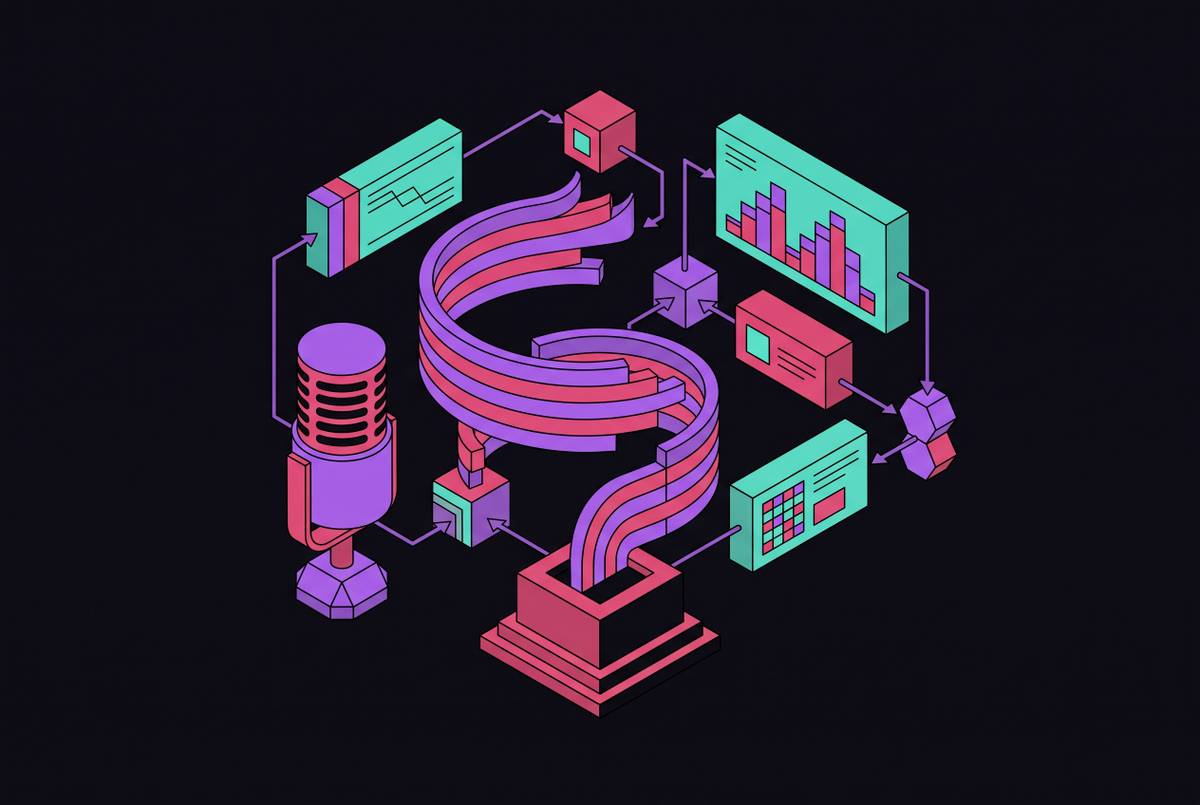
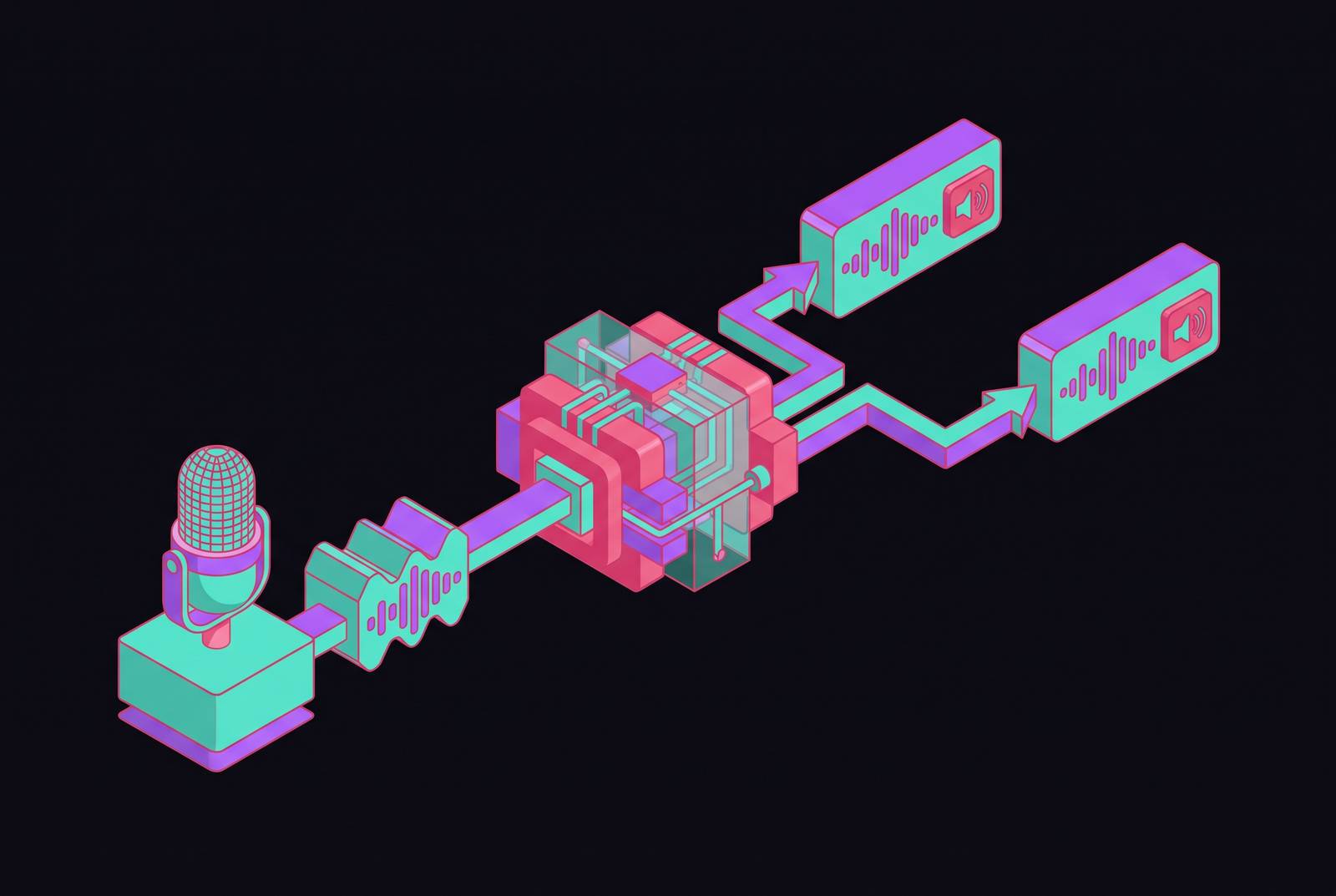
The mechanism is simpler than the marketing around it suggests. The model compresses the reference clip into a speaker embedding, a numerical fingerprint of vocal identity covering timbre, pitch pattern, and rhythm. Synthesis is conditioned on that embedding directly; no fine-tuning, no gradient updates specific to the new speaker. The model generalizes from thousands of other voices seen during pretraining, then makes an educated guess about how this new voice would say something it never actually said. That's the whole trick, and it's called zero-shot cloning for a reason.
Two architecture families dominate right now. One is fully autoregressive: the model predicts discrete acoustic tokens one after another, in the lineage of VALL-E, carried forward by systems like Fish-Speech and Qwen3-TTS. The other is a coarse-to-fine hybrid, pairing autoregressive semantic modeling with a non-autoregressive pass that refines acoustic detail; CosyVoice and IndexTTS both work this way. Both families share discrete audio tokenization, treating speech generation as a language modeling problem instead of a signal processing one. That reframing made zero-shot generalization possible in the first place: it turned "synthesize a voice" into next-token prediction, the one problem the entire AI field has spent a decade getting good at.
IndexTTS, described by Deng et al. in 2025, sits near the frontier here. It combines large language model features with finite scalar quantization and a conformer encoder, and posts state-of-the-art zero-shot results on published benchmarks. None of this recovers information that was never in the sample, though. A three-second clip recorded on a phone in a loud kitchen won't give the model consonant clusters it never heard, emotional range it never captured, or the phonetic variety needed to sound convincing outside a narrow set of sentences. The embedding is only as good as what it was shown, and no architecture, however clever, fixes a bad recording. A friend once tried to clone his own voice from a single voicemail he'd left himself, mostly just him saying "uh, yeah, call me back."" The model dutifully learned to say " He'd fed it a haiku and expected a novel back.
What sample length actually changes about output quality
University of Cambridge research found AI systems could replicate up to 95% of subtle vocal characteristics, up from 78% in 2023. That's a real jump. The number assumes a reasonable sample, though, not three seconds recorded next to a running dishwasher, and quality claims like this travel with an asterisk that never makes it into the press release.
The variable doing the actual work is phonetic coverage, not raw duration. A short clip nails timbre, the basic color of a voice, but it may never show the model how the speaker handles a hard consonant cluster, a laugh, a mid-sentence pitch shift when they get annoyed. Longer samples close those gaps simply because they contain more of the speaker's range.
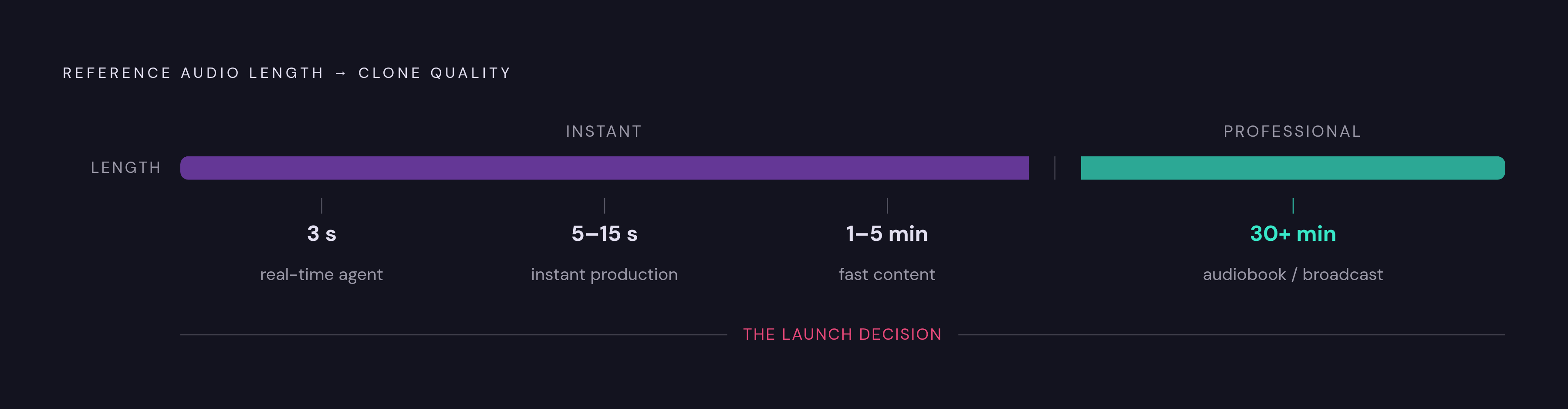
Thresholds vary by platform, but a rough map as of 2025 to 2026 looks like this: Some services generate from as little as 3 seconds, as Cartesia does; platforms like ElevenLabs, a text-to-speech and voice cloning tool, target the 5-to-15-second floor for instant production use; 1 to 5 minutes covers most fast content workflows; 30 minutes or more is where audiobook and broadcast-grade output lives. Instant cloning at 3 to 15 seconds buys a credible, recognizable identity, fine for a real-time agent or a quick draft. Professional cloning at 30-plus minutes buys something close to indistinguishable from the source, which is what long-form or high-stakes work actually demands. Treat those two tiers as interchangeable and one of two things happens: the audiobook sounds hollow, or the budget for the support bot gets blown on fidelity nobody asked for.
Length isn't the only lever, either. Thirty seconds of clean, mic-quality audio beats five minutes of compressed phone audio most of the time, because the model spends less capacity fighting noise and codec artifacts and more of it learning the actual voice. Match the tier to the job. Don't run an audiobook through an instant-clone pipeline built for quick iteration, and don't ask a customer to read a 30-minute script to onboard a voice agent that only needs to sound plausible on a support call.
Latency — why it's a separate axis from quality
Quality and speed are separate problems, and treating them as one is how projects end up disappointing everyone. For real-time agents, the metric that matters is time-to-first-audio: the gap between the model receiving text and the first chunk of audio hitting the speaker. Nobody cares how natural the voice sounds if it takes two seconds to start talking. It's the audio equivalent of a brilliant comeback you think of three hours after the argument ended.
Production APIs currently land somewhere between 40 and 150 milliseconds of time-to-first-audio on streaming endpoints. Cartesia's Sonic-3 gets to roughly 90 milliseconds, using a State Space Model architecture instead of a transformer-based decoder. That choice matters because transformers lean on attention mechanisms that get expensive when decoding incrementally, chunk by chunk, in real time; State Space Models sidestep a lot of that overhead, which is why they show up specifically in latency-sensitive streaming rather than offline batch generation.
Sub-200 millisecond latency is generally treated as the line where conversational agents stop feeling mechanical. Cross it, and turn-taking breaks down; the pauses feel like a phone call on a two-second satellite delay, and people notice immediately even if they can't say why. Here's the catch nobody wants to hear: the models scoring highest on naturalness, mean opinion scores above 4.0, word error rates below 2% on published benchmarks, aren't reliably the same models tuned for 90 millisecond response times. Pick a lane. Optimizing for one axis tends to cost a little on the other, and no vendor has cracked both at once.
The open-source landscape and what it enables for developers
As of mid-2025, roughly nine open-source voice cloning models carry commercial-use licenses, among them Chatterbox, CosyVoice 2, GPT-SoVITS, OpenVoice, Spark, and IndexTTS-2. That's a real market, not a handful of academic side projects. CosyVoice 2 and Qwen3-TTS go further and preserve voice identity across more than 17 languages, meaning a clone built from an English sample can generate Mandarin, Japanese, or Korean speech without a second cloning pass.
Going open-source buys full control: known training data, no per-character billing at scale, deployment that stays entirely on-premise, which matters a lot to anyone in a regulated industry with data residency requirements. It also hands the team a bill nobody mentions in the GitHub README. Infrastructure has to be built and maintained, there's no SLA to call when something breaks at 2 a.m., latency tuning becomes an internal engineering project, and consent capture and safety tooling get built from scratch instead of inherited.
Managed APIs shift that bill elsewhere: preprocessing pipelines, streaming infrastructure already load-tested, versioned model updates that don't require a re-deploy, consent and watermarking features that take real engineering hours to build correctly. None of that is exotic work, but all of it is work, and at enterprise scale the hours add up fast. Framing the choice as open-source versus managed, as ideology, is exactly how teams pick wrong. It comes down to volume, how strict the latency requirement is, and whether voice-safety guarantees are a nice-to-have or a contractual requirement.
Multilingual cloning and what cross-lingual identity preservation actually means
Localization used to mean hiring a new voice actor for every market and hoping the tone survived translation. It rarely did. The German version of a training video sounds like a different, more serious person than the English original, because it is one.
Cross-lingual voice cloning changes the mechanism entirely. The same speaker embedding drives synthesis in a second language, so the listener hears the same voice carrying the material into a new market, rather than a translation performed by a stranger who happened to be in the recording booth that day. An audiobook recorded once in English can be published in additional languages without a second recording session. A presenter narrating a training video can appear, in their own voice, across every regional market the company operates in.
Coverage claims deserve real scrutiny, though, and this is where the marketing gets ahead of the physics. Some platforms cover a modest 17-plus languages with genuinely strong identity preservation. Others advertise 175 or 177 languages, which sounds like the bigger win until the tail languages turn out to have thin fidelity: flattened prosody, a voice that sounds close to the original in English and increasingly like a stranger the further down the list you go. Native-quality output across 70-plus languages is a real bar, and most platforms claiming broad language support don't clear it. The number on the homepage is the wrong question. The right one is whether the model keeps the emotional coloring and rhythm intact when it switches scripts, or whether it just gets the words right and calls it a day.
Get that right, and localization stops being a scheduling bottleneck, weeks of studio time, multiple rounds of talent coordination, and turns into something closer to a rendering step. That's a real restructuring of the content pipeline for any team working across markets.
Where instant cloning is being deployed right now
Content creators narrate audiobooks in their own voice without booking a studio for a week straight. Podcast networks dub episodes into new language markets without re-recording the host. Short-form video creators generate voiceover at a volume no human voice actor could sustain.
On the enterprise side, customer-support agents built on cloned brand voices handle inbound calls directly. Speechmatics reported that 47% of companies used voice-led technologies in 2024 to automate customer conversations and internal workflows, which puts this well past the fringe-experiment stage and into a line item in a lot of operating budgets.
Accessibility carries some of the highest stakes in the whole category: voice restoration for people who've lost the ability to speak naturally, personalized assistant voices for users who find generic synthetic speech disorienting rather than mildly annoying. Real-time dubbing for multilingual meetings preserves the speaker's actual voice, carrying who's actually talking through the translation instead of flattening it into a generic narrator. Gaming studios generate NPC dialogue at runtime from a single reference recording, cutting out the need to pre-record every branch of a conversation tree.
Each deployment sits at a different point on the quality-latency map, and that's the detail worth holding onto. A gaming NPC tolerates a beat of extra latency that would kill a live phone call. An audiobook demands a fidelity bar an onboarding chatbot never has to clear. There's no single "good enough" threshold, only the threshold that matches the job.
Consent, legal exposure, and platform-level safeguards
Cloning someone's voice without permission is legally actionable in most jurisdictions, full stop. Right of publicity claims, personality rights, and a growing stack of AI-specific statutes all apply, and none of them treat "the model just generalized from public data" as much of a defense. Regulatory activity between 2024 and 2026 has moved faster than a lot of development teams seem to expect, and multiple jurisdictions have enacted or proposed voice-specific protections in that window.
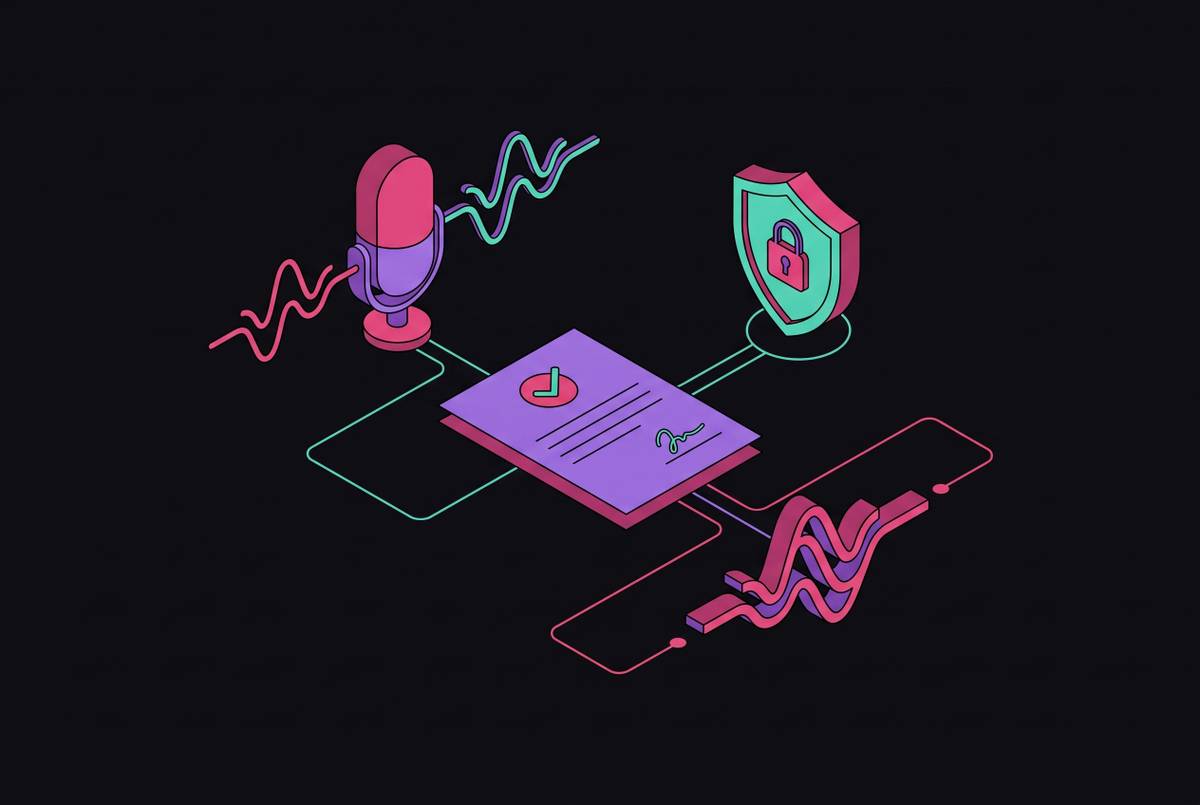
Consent has to be a design decision, built into the flow before a clone ever gets created, not a legal afterthought buried in a terms-of-service checkbox nobody reads. A platform built responsibly requires the user to affirm ownership or rights to the reference audio before a clone gets created at all. That's a gate, not a suggestion, and any platform treating it as optional is building a liability.
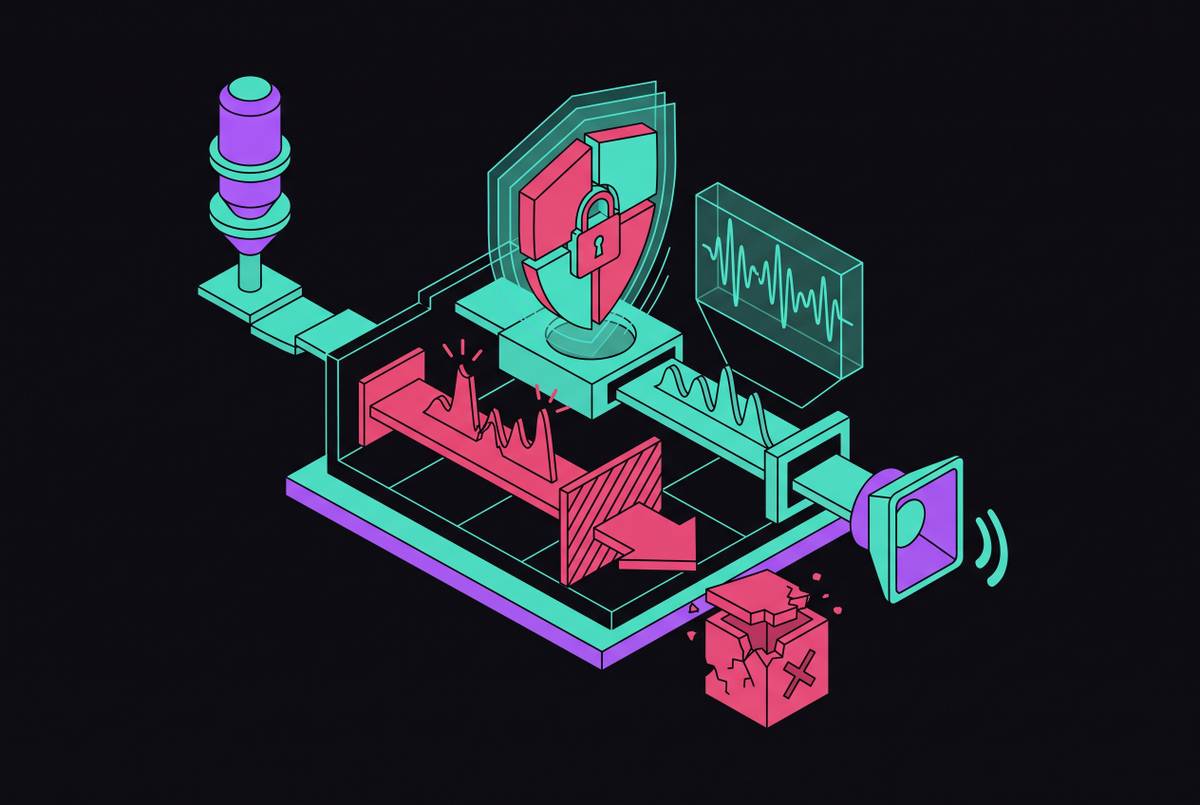
Detection is scaling right alongside generation. The voice cloning detection market reached $2.2 billion in 2025 and is projected to hit $20.0 billion by 2035. That trajectory matters for enterprise risk assessment, because the tools to catch an unauthorized clone are becoming as commercially significant as the tools that make one. Developers building in this space should plan for explicit consent capture at onboarding, an audit trail tying specific voices to specific outputs, and clear contractual terms governing third-party voice use. Platforms built on licensed training data, with watermarking built into the model layer rather than bolted on after the fact, give enterprise deployers a legal position that a home-built pipeline stitched together from open-source components usually can't match.
How to choose the right cloning approach for a given build
Start with what audio actually exists. Seconds of reference audio means instant cloning is the only realistic option. Thirty-plus minutes of clean, scripted recording opens the door to professional cloning, and it's worth the extra setup time when the output gets judged by a broadcast audience.
Check the latency requirement next, because it's non-negotiable in a way quality sometimes isn't. Real-time agents need sub-200 millisecond time-to-first-audio or the conversation starts to feel broken. A batch pipeline generating narration overnight can tolerate several seconds per line without anyone noticing or caring.
Language scope narrows the field fast. A single-language deployment keeps model selection simple; cross-lingual identity preservation cuts the list of viable options considerably, and the evaluation has to run against the actual target languages the product needs, not the headline count on a vendor's homepage.
Fidelity tier and compliance posture round it out. A support agent needs a voice that's consistent and credible call after call, not broadcast-perfect. An audiobook released commercially under an author's name gets judged by a harsher standard entirely, and pretending otherwise is how a launch turns into a review-bomb. Any enterprise deployment carrying real legal exposure should weight consent enforcement, watermarking, and audit trails heavily, because that's the part of the stack that shows up in a courtroom, not a demo.
Teams working across content creation, localization, and live agent deployment do better on a single stack: one consistent voice identity, shared model infrastructure, one consent framework running underneath everything, rather than duct-taping together a different tool for each job. Fewer seams means fewer places for a voice, or a legal claim, to slip through.