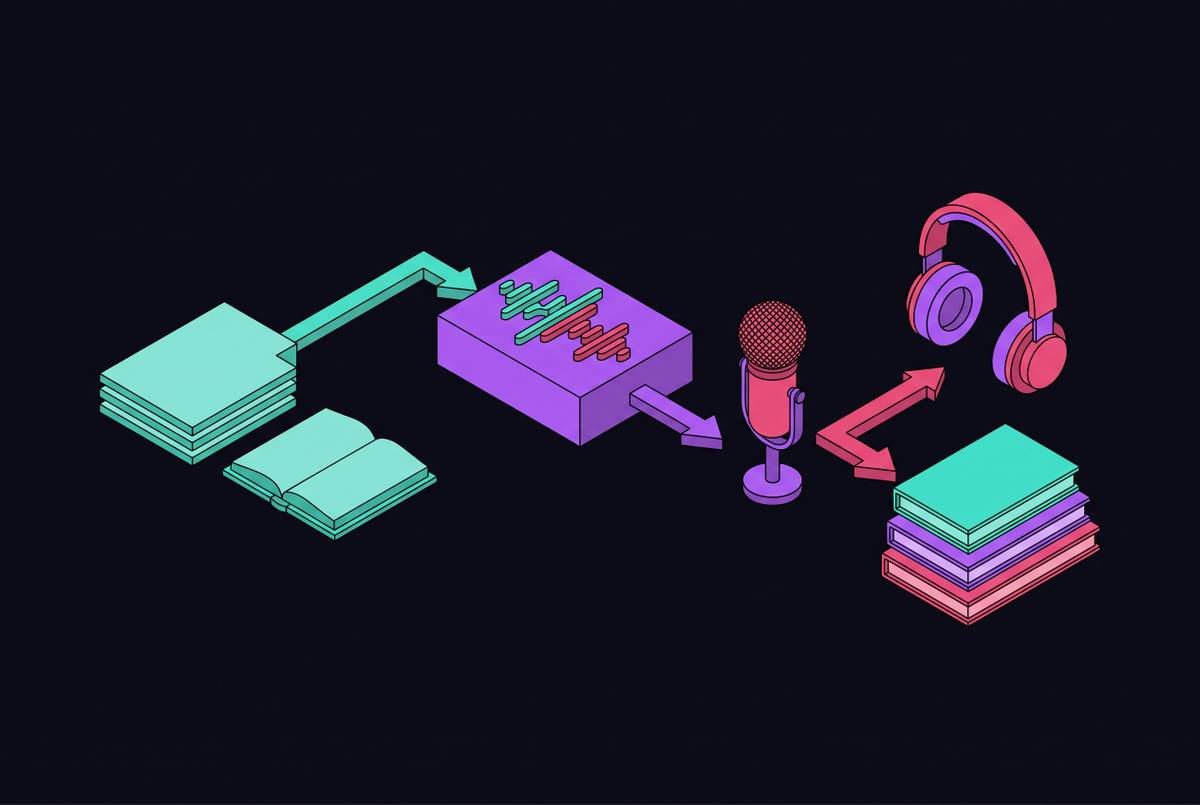
multilingual TTS platforms for global marketing campaigns
Quality and brand voice consistency matter more than language count when scaling globally.
Multilingual voice synthesis stopped being a nice-to-have somewhere around 2025. Nearly every B2B team now runs AI translation or dubbing in some form, and that shift changes what "buying a TTS platform" even means. Vendors used to compete on whether they covered your target markets at all, full stop. Now buyers have to ask a harder question: does the voice still sound like your brand once you get there? I've sat through enough vendor demos to tell you that language coverage is the easy part. What separates a platform that scales a global campaign from one that quietly wrecks it comes down to three things: native-quality output, emotional range, and a voice that holds together from Tokyo to Toronto.
That distinction sounds obvious once you say it out loud. It gets ignored constantly anyway, because vendor marketing sells language counts, not quality, and most buyers still shop the spec sheet like it's a used car lot, kicking tires that don't tell them anything about the engine.
What the TTS market actually looks like in 2025-2026
The growth numbers are hard to overstate, so I'll just state them. Global Market Insights put the TTS market at $4.8 billion in 2025, climbing to $35.3 billion by 2035, a 22.4% compound annual growth rate. Narrow it to AI voice specifically and you go from roughly $4.16 billion in 2025 to $20.71 billion by 2031, pushed along by multilingual work across media, customer support, and automation that used to need an actual human in a booth somewhere.
North America held 38.1% of the market in 2025. Worth sitting with, if you're planning a campaign that isn't English-first: the money and the infrastructure still cluster in one place, even though the entire selling point of the technology is that it doesn't have to.
More useful than a market-size figure is this: real-time voice AI usage grew four times over in 2025. The models didn't just get faster in twelve months. They crossed a line, from "impressive demo" to "good enough to run production workflows on," and that line is the one that actually matters. A market grows up when procurement stops asking "does this work" and starts asking "does this work at 2am under load, when nobody's watching."
Buyers walking in now are choosing between established enterprise vendors and a research frontier that's still moving month to month. Whatever gets picked this year gets expensive to unwind next year, and not because of the contract terms. Vendor lock-in in voice AI is operational: brand voice assets, cloned models, SSML tuning, none of it ports cleanly to a competitor. Try moving a cloned spokesperson voice from one vendor's pipeline to another's and watch how much of the "just export it" story turns out to be marketing.
The foundational research that determines voice quality
Every TTS platform on the market descends from a short, specific line of research, and that lineage tells you more about a vendor than its pricing page ever will. WaveNet, out of DeepMind, proved you could generate raw audio waveforms directly instead of stitching together pre-recorded phonemes. Tacotron, from Google Brain in 2017, made end-to-end synthesis work: text in, speech out, no hand-built pipeline in the middle. FastSpeech in 2019 pulled duration modeling apart from everything else, which sounds like plumbing because it is, but that plumbing is what gives you actual control over pacing instead of a voice that races or drags.
HiFi-GAN showed up at NeurIPS in 2020 and set the fidelity bar using generative adversarial networks; for a few years, GAN-based vocoders were just the standard, full stop. Diffusion models have since taken the expressiveness crown, because they handle the messy parts of human speech, the pauses, the breath, the emotional lean, better than adversarial training ever did.
The current wave gets stranger still. WavTTS skips the spectrogram step and models raw waveforms directly. DiffStyleTTS uses diffusion to model prosody hierarchically, so you get finer control over style without losing naturalness. Semantic-VAE builds a latent representation tied to meaning instead of raw acoustic signal, which improves fidelity in ways a fine-tuned checkpoint just can't fake.
None of this is trivia for its own sake. It predicts, with real accuracy, which platforms hold together as they add their 40th language and which ones start fraying at the edges. A vendor fine-tuning someone else's foundation model inherits that model's blind spots along with its strengths. A vendor training from scratch controls the whole chain, prosody and cross-lingual consistency included, rather than inheriting whatever bias got baked in upstream by someone else's training run.
Why language count alone is a misleading buying criterion
Azure Speech advertises 140-plus languages. Google Cloud TTS lists 50-plus languages and dialects with over 300 voices. Smaller vendors quote 70, or 20, whatever number looks competitive that quarter, and not one of these numbers tells you whether the Portuguese voice sounds like a person or a parking garage announcement.
Coverage and quality sit on different axes entirely. A platform can technically support Thai and still hand you one flat voice that falls apart the moment your ad copy needs warmth, urgency, or a joke to land. Native quality means the output carries the target language's own rhythm, its own stress patterns and pause placement, instead of English prosody wearing a translated script like a costume two sizes too big. Get this wrong and native speakers clock it instantly, even when they can't say exactly why the ad sounds slightly foreign in its own language.
Emotional expressiveness is its own separate problem. A voice can nail every phoneme and still sound emotionally dead, which is fine for a shipping confirmation and disqualifying for an ad that's supposed to make someone feel something. Brand voice consistency makes both problems worse at once: a brand that sounds warm and confident in English can flatten into something generic by its fourth or fifth market if the model isn't equally expressive across every language it claims to cover.
Voice cloning adds one more wrinkle. Voice cloning can replicate a person's voice with as little as 30 seconds of recorded speech, which looks like magic right up until you test it across languages. The clone holds up fine at home and degrades unevenly everywhere else, depending on how well the model actually learned to transfer across languages instead of just replaying one particularly well.
How latency requirements differ between content creation and real-time campaigns
"Multilingual TTS for marketing" is really two jobs wearing one label. Pre-produced content, ads, explainer videos, dubbed back-catalog, has no real latency constraint. You render it once, review it, and ship it. Real-time conversational work, voice agents, live campaign follow-up, interactive experiences, lives and dies by milliseconds.
For pre-produced audio, judge on quality, expressiveness, and how well the localization actually lands, full stop. For real-time work, sub-100ms time-to-first-audio is roughly the line between "conversation" and "awkward pause that gives the whole thing away." The leading options in 2026 sit right around that mark, with several platforms landing in the 75ms to 90ms range.
Plenty of enterprise campaigns need both halves running at once now, localized ads produced asynchronously alongside a voice agent handling the live follow-up, and running two separate vendors for that becomes its own quiet tax on the team. Latency numbers also lie if nobody checks them under load. A platform quoting 75ms in a clean demo and then choking once fifty concurrent sessions hit it is ready for a screenshot, not a global launch.
The platforms marketing and developer teams are actually using
Google Cloud TTS gives you 300-plus voices across 50-plus languages and dialects, with WaveNet and Neural2 model options and SSML support for hand-tuning pitch, rate, and emphasis. It fits teams already living inside the Google stack who need wide language coverage without switching cloud providers just for audio.
Azure Speech runs 140-plus languages, and its Dragon HD Omni model introduced over 700 voices, with context-aware emotion detection built in. Neural HD 2.5, released in March 2026, added better paralinguistic tags, and Microsoft dropped Neural HD pricing that same month from $30 to $22 per million characters. Its Voice Live API, generally available since Ignite 2025, folds speech-to-text, text-to-speech, and an LLM into one call, which matters to teams standardized on Microsoft who are tired of stitching three services together by hand.
Fish Audio takes a different angle entirely, hosting over two million voices, aimed at creative work, storytelling, dynamic ad variants, audiobook production, where sheer voice variety beats an enterprise SLA.
The platforms worth watching longer-term handle both halves of the job, pre-produced content and live conversational deployment, inside one API. Every seam between vendors is a seam your engineering team maintains forever, whether they signed up for that or not.
What enterprise localization teams get wrong when evaluating these platforms
The first mistake, and I see this constantly, is treating TTS rendering as a one-time event instead of an ongoing pipeline. Campaign copy changes, prices update, regional rules shift, and every one of those triggers a re-render. Platforms without real versioning and asset management turn that into manual labor, repeated forever, by someone who did not sign up to be a human render queue.
Testing voice quality in English and assuming it carries over is the second one. The gap between a platform's flagship English voice and its tenth-priority language voice can be wide enough to embarrass a brand that skipped this check, and plenty of brands skip it.
Underestimating how much a cloned voice can drift comes next. A voice cloned from a spokesperson might sound exactly like them in English and noticeably off, colder, flatter, less sure of itself, in a language the underlying model never learned as deeply. Cross-lingual transfer is a real engineering problem, not a checkbox on a vendor form, no matter how the form is worded.
The one nobody catches until it's too late: buying on language count without testing emotional range at all, at a moment when using AI translation in some form is close to universal among B2B teams. Nearly every platform on the market is technically functional now, so the real filter is whether it's good enough to actually represent the brand, and that's a much narrower bar than most procurement checklists apply.
Good testing looks unglamorous. Take identical, emotionally loaded copy, run it through every candidate platform in the three to five languages that actually matter for the campaign, and listen for prosody, pacing, warmth. The real test isn't whether the words are pronounced correctly. It's whether a native speaker would believe an actual person said them, full stop.
How to match platform capabilities to campaign requirements
Start by separating the two use cases honestly. Pre-produced audio, ads, explainers, audiobooks, dubbing, needs quality and expressiveness above everything else. Real-time deployment, voice agents, interactive campaigns, live support, needs latency and reliability above everything else. Don't grade both against the same checklist. They're not the same test, and grading them like they are is how teams end up with a platform that's great at one job and mediocre at the other.
Prioritize languages over language count. Figure out which ten markets actually drive most of the campaign's value, then test platforms specifically against those languages and ignore the other ninety on the vendor's slide. If brand voice consistency matters, test cloning quality in every target language before signing anything. That 30-second cloning threshold vendors love to advertise measures how fast you can capture a voice, not how well it survives translation into something the model barely knows.
Infrastructure fit matters more than feature comparisons suggest. Teams already running on Azure or Google get a real integration cost advantage sticking with those ecosystems' TTS tools. Teams building something new, or needing one stack that handles both content and live agents, should weigh platforms offering the full loop without stitching five vendors together by hand. Compliance can't be an afterthought either: GDPR, SOC II, data residency rules vary by market, and any campaign touching the EU needs a platform with an auditable compliance story, not a marketing page that says "compliant" in the footer and hopes nobody asks follow-up questions.
The signal buyers underweight most is scalability. Real-time usage quadrupling in a single year means production-scale voice AI is already the baseline, not some future state to plan for later. A platform without proven reliability under concurrent load looks great in a demo and falls apart the moment a real campaign launch hits it, usually at the worst possible time.
What the next generation of multilingual voice AI will require from marketing teams
Emotional and multimodal expressiveness is the next real frontier. Speech-to-speech systems that skip the text step entirely are already running at the research edge, and audio that shifts its tone in real time based on context or audience signal isn't a distant hypothetical anymore. It's a research paper away from a product page, maybe less.
Gartner's 2025 Emerging Technology Hype Cycle places conversational AI and voice interfaces on the Slope of Enlightenment, which is analyst-speak for "the hype phase is over and this is turning into standard infrastructure." Opus Research's 2025 Conversational AI Report founds 2025 Conversational AI Report found enterprises running the full loop, speech-to-text, text-to-speech, and conversational logic together, cut average handle time by 28% compared to text-only channels. For marketing teams, voice agents are becoming a channel with its own numbers attached, one that deserves its own line item rather than a spot in the support-desk budget.
The brand consistency problem only gets harder as output volume scales up. Teams that write down voice guidelines, formally approve cloned assets, and build a real review workflow now will be in a far better spot than teams still treating every market's audio as its own one-off production job, reinvented from scratch every quarter.
Consolidation is coming too. Slator sized the broader language industry at tens of billions of dollars in 2025, and the economics increasingly favor platforms that unify translation, dubbing, TTS, and conversational agents under one roof. A fragmented stack, five vendors, five contracts, five APIs, gets harder to defend every quarter an integrated alternative gets better. The dividing line worth watching is the one between vendors fine-tuning someone else's foundation model and vendors training their own, ElevenLabs being one example of the latter camp. It's an architectural choice more than a marketing one, and it shows up in exactly one place that matters: whether a brand's voice still sounds like itself by the fifth language on the list.